
Business mentoring for dental leaders
01962 587787
Practical insights for dental leaders who want to build thriving teams, cut stress, and lead with clarity.
The Hidden Cost of Kindness Without Accountability
You're a supportive leader. You're appreciative. You never criticise.
Your team seems happy. Morale is decent. People feel valued.
Yet performance has plateaued. New challenges get met with resistance, not curiosity. When you suggest a stretch goal or a new system, people push back or go quiet.
You've built a nice culture. Not a high-performing one.
Here's what happened: you gave high support without high challenge. And that creates comfort zone culture—a place where people feel appreciated for showing up, not for growing.
The Comfort Zone Trap
Recognition is powerful. Appreciation matters. People need to feel valued.
But if every piece of feedback is positive, if every effort gets praised regardless of outcome, if you never push people beyond what's comfortable—you're not building capability. You're building complacency.
This isn't because your team lacks ambition. It's because you've trained them that comfort is the goal.
When someone delivers mediocre work and you say "great job," you've just defined mediocre as good enough.
When someone avoids a difficult conversation and you don't address it, you've just taught them that avoidance is acceptable.
When someone stays in their lane, never stretching, never learning, and you keep praising their "consistency," you've just told them that growth is optional.
You meant to be kind. You've actually been limiting.
What High Support, High Challenge Actually Means
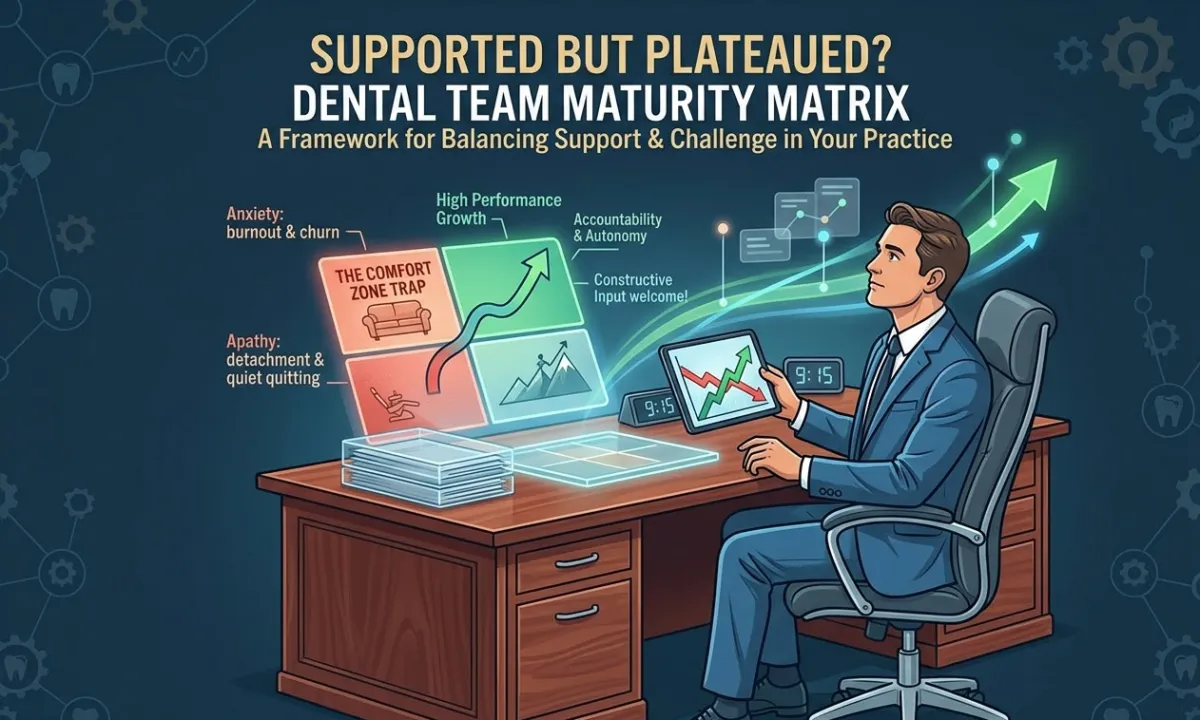
There's a model from education research that maps performance culture across two axes: support and challenge.
Low support, low challenge: stagnation. Nobody cares, nobody grows.
High support, low challenge: comfort zone. People feel safe, but they don't develop.
Low support, high challenge: anxiety. People are pushed hard but feel abandoned.
High support, high challenge: high performance. People are stretched and supported. They grow.
Most well-meaning leaders land in the comfort zone quadrant. They care deeply about their teams. They want people to feel valued. So they focus on support—encouragement, appreciation, positivity.
But they shy away from challenge. They avoid difficult feedback. They don't push people to do hard things. They let poor performance slide because they don't want to damage morale.
And over time, the culture settles. People become risk-averse. They stop volunteering for new responsibilities. They resist change. They do what's familiar and comfortable, and nothing more.
Carol Dweck's work on growth mindset shows that people thrive when they're challenged appropriately and believe they can develop through effort. But if you never challenge them, you're sending a fixed mindset message: "You're fine as you are. Don't change."
That's not kindness. That's a ceiling.
What This Looks Like in Dental Practices
Your team avoids stretch assignments. When you ask for volunteers to lead a new initiative or learn a new system, nobody steps forward.
Feedback conversations feel one-sided. You offer developmental feedback, and people become defensive or hurt. They're not used to being challenged, so challenge feels like criticism.
Change initiatives stall. You introduce a new process, and the team complies minimally or reverts to old habits as soon as you stop watching.
Performance is consistent but not improving. People do their jobs competently. They don't excel. They don't innovate. They don't push themselves.
Your high performers leave. The people who want to grow, who crave challenge, who get bored with comfort—they find somewhere that will stretch them.
This isn't a motivation problem. It's a design problem.
You've built a culture where appreciation is abundant but expectations are soft. And people have adapted accordingly.
The Cost of Comfort Zone Culture
Comfort zone culture feels safe in the short term. People don't complain. Morale seems stable. Turnover is low (except among your best people, who leave quietly).
But it's fragile.
When external pressure hits—an associate leaves, a key team member goes on maternity leave, you need to implement a difficult change—the team struggles. They're not used to being uncomfortable. They don't have the resilience or adaptability you need.
You end up over-functioning as the leader. You step in to solve problems, make decisions, and handle the hard things because your team hasn't been trained to do it.
And over time, you burn out. Because you've built a culture that's nice, but not capable.
Patrick Lencioni talks about the need for teams to embrace productive conflict and hold each other accountable. Comfort zone cultures avoid both. People are too nice to challenge each other. Standards drift. Performance plateaus.
Simon Sinek frames this as the difference between finite and infinite games. Finite players optimise for comfort and stability. Infinite players optimise for growth and resilience. Comfort zone cultures are playing a finite game—and they're vulnerable because of it.
What Recognition Should Look Like in High Performance Cultures
Recognition isn't the problem. The absence of challenge is.
High-performing cultures recognise effort, growth, and behaviour aligned with values. But they also set clear expectations, give honest feedback, and push people to develop.
This sounds like:
"You handled that case brilliantly. I can see you're ready for more complex work. Let's talk about what's next."
"I noticed you avoided that difficult conversation with the patient. That's not like you. What got in the way, and how can we address it?"
"Your consistency is valuable, but I think you're capable of more. I'd like to see you take on [specific stretch goal]. I'll support you, but I'm going to hold you to it."
This is high support and high challenge working together.
You're not withholding appreciation. You're pairing it with growth.
You're not being harsh. You're being honest.
You're not criticising. You're raising the bar because you believe in their potential.
And here's the critical shift: recognition in high-performing cultures isn't just for outcomes. It's for effort, for trying hard things, for learning from failure.
"You didn't hit the target, but you tried something new and learned from it. That's exactly the mindset we need."
That's high support, high challenge. You're acknowledging the effort and the learning while maintaining the expectation that they keep pushing.
The Diagnostic Question
How do you know if you're stuck in comfort zone culture?
Do your team members avoid stretch assignments or new responsibilities?
Is feedback overwhelmingly positive, rarely developmental?
Do people become defensive when challenged or given constructive input?
Has performance plateaued—consistent, but not improving?
Do change initiatives stall or revert to old habits quickly?
Have your high performers left while the steady, comfortable performers stayed?
If the answer to most of these is yes, you've prioritised support over challenge. And it's cost you growth.
Building High Support, High Challenge Culture
This isn't about becoming harsh or withholding appreciation. It's about pairing recognition with expectation.
Set clear standards. Define what excellent looks like, not just acceptable.
Give honest, developmental feedback. Not just praise. Tell people where they can grow.
Push people into stretch assignments. Don't wait for volunteers. Identify capability and challenge people to develop it.
Recognise effort and learning, not just outcomes. Celebrate the person who tried something hard and failed, as long as they learned.
Model this yourself. Seek feedback. Admit mistakes. Show that being challenged is safe and valuable.
High support means people know you care, you're invested in their development, and you'll back them when they struggle.
High challenge means you expect them to grow, you won't accept mediocrity, and you believe they're capable of more than they think.
That's the culture that retains good people, builds capability, and weathers difficulty.
If your team has stopped pushing themselves, if performance has plateaued, if challenge feels uncomfortable—you're in the comfort zone quadrant. Email me with the word CHALLENGE and I'll send you the diagnostic section from the Dental Team Performance Scorecard that reveals exactly where you are on the support-challenge matrix and what to adjust.





© 2026 Purpose Driven Business Ltd. All Rights Reserved